

AI-Powered Remanufacturing: The Reman Guidance System (RGS)
Every remanufactured product begins with a returned product – known in the remanufacturing industry as a core. But assessing whether returned products and components can be economically and technically remanufactured remains a difficult challenge. Making this decision quickly and accurately is essential for profitable remanufacturing.
Traditional inspection processes are often manual, inconsistent, and time-consuming, leading to unnecessary transportation costs, delayed decisions, and missed opportunities to recover valuable products.
To address this challenge, rEUman partner CORE IC developed the Reman Guidance System (RGS), an AI-powered decision support system that helps companies assess cores more efficiently, consistently, and transparently.
How the Reman Guidance System (RGS) works
The Reman Guidance System (RGS) supports companies in assessing returned products directly at the point of collection, such as workshops or service centres. Instead of relying solely on manual inspection, the system gathers and analyses information from multiple sources to build a comprehensive picture of a product's condition.
Depending on the available data, the RGS can evaluate photographs, thermal images, audio recordings, industrial test results, historical information, and enterprise data. By combining these different sources, the system gains a more complete understanding of the product than would be possible through visual inspection alone.
Based on this analysis, the RGS provides recommendations on the most appropriate next step for the returned product. Rather than simply deciding whether a component should be remanufactured, the system helps determine whether it is best suited for remanufacturing, repair, reuse, certification, or recycling. In addition to the technical condition of the product, the recommendations also consider economic aspects, helping companies make decisions that are both technically sound and commercially viable.
The system is designed to support—not replace—human expertise. Operators remain in control of the final decision while benefiting from AI-powered insights that make the assessment process faster, more consistent, and easier to understand.
Smarter Decisions through AI
One of the RGS‘s key innovations is the use of explainable AI which shows why a particular decision was made. Operators can view highlighted defect areas, confidence levels for detected issues, and clear explanations of how identified damage influences the remanufacturing potential of a component. This transparency helps users to understand and verify the AI’s recommendations, which builds trust in the technology whilst ensuring that the final decision always remains in human hands.
Another important feature is the system's ability to improve over time. By incorporating feedback from real industrial applications, the RGS continuously refines its models and decision logic.
Together, these capabilities make the Reman Guidance System more than an inspection tool. It acts as an intelligent decision-support system that helps companies recover more value from returned products while improving efficiency, reducing waste, and supporting the transition towards a more circular manufacturing industry.
Benefits for Remanufacturing
The Reman Guidance System improves the remanufacturing process in several ways: by reducing inspection time, improving traceability, and standardising assessments. That way, companies can identify suitable cores earlyier in the process, which reduces unnecessary transport and inspection efforts, supports more consistent evaluations, and helps recover greater value from products that can be remanufactured. Beyond improving operational efficiency, the RGS contributes to more sustainable manufacturing by enabling better use of resources and reducing avoidable waste.

Image: CORE-IC
The technology behind the RGS
The Reman Guidance System combines several advanced Artificial Intelligence technologies to support remanufacturing decisions. Using a multimodal AI approach, the system analyses multi-modal data sources, like text-based, visual and audio sources, and enterprise data to build a comprehensive understanding of a core's condition. Computer vision algorithms detect defects, classify components, while OCR technologies digitise information from labels, technical reports, and other documents.
The RGS is built on an agentic AI architecture in which specialised AI agents collaborate to analyse product conditions, evaluate technical and economic aspects, and coordinate decision-making workflows.
Large Language Models (LLMs) provide a natural language interface, allowing
users to interact with the system, explore assessment
results, and receive transparent explanations of the recommended actions.
Designed as a continuously learning system, the RGS incorporates feedback
from real industrial applications to refine its AI models and decision logic
over time. This enables increasingly accurate recommendations while
continuously improving the efficiency and intelligence of remanufacturing
processes.
Validated across multiple industrial cases
The Reman Guidance System is being validated across four industrial use cases within the rEUman project, demonstrating its flexibility in supporting different remanufacturing processes and product types. Each use case contributes to the further development of the system by validating its AI capabilities under real industrial conditions.
"Technology should simplify complexity, not create it. With the Reman Guidance System, our goal was to transform complex industrial data into clear, actionable guidance that people can trust. By combining multimodal AI, explainable decision-making, and human expertise, we are helping make remanufacturing smarter, more sustainable, and ultimately more scalable for the industries of the future."
- Christina Vlasi, AI Engineering Lead, CORE IC


PCB Quality Control


Electronics Module Inspection
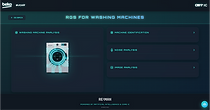

Washing Machine inspection


Alternator Core Assessment & Crediting
Images: CORE-IC
Looking ahead
As validation activities continue within the rEUman project, the Reman Guidance System will be further refined and demonstrated. The project aims to advance the technology from Technology Readiness Level (TRL) 7 to TRL 9, bringing it closer to full industrial deployment. By combining human expertise with explainable Artificial Intelligence, the RGS is helping to pave the way for more efficient, transparent, and scalable remanufacturing processes.
As part of rEUman's vision for human-centric remanufacturing, the RGS contributes to making remanufacturing more competitive, resource-efficient, and ready to meet the challenges of future manufacturing.